Wednesday, July 6, 2022

Beet it to Defeat it.

 “Just beat it (beat it), beat it (beat it)

No one wants to be defeated

Showin' how funky and strong is your fight”

(Beat It – Song by Michael Jackson)

~~~~~~~~~~~~~~~~~~~~~~~~~~~~~~~~~~~~~

“Just eat it, eat it, eat it, eat it

Get yourself an egg and beat it.”

(Eat It - Song by "Weird Al" Yankovic”

From the moment of birth, our bodies begin to die; it is just a fact of human life.  However, that does not mean that we simply sit around and wait for that last moment.  Instead, we live!  If the Fates allow, we develop into different stages of humanhood – baby, young child, teen, young adult, adult, senior adult.  We become educated, discover our likes and dislikes, create a business or work for others; friendships, loving relationships, partnerships are formed.  Perhaps have children of our own and impart on them what wisdoms we have learned throughout our own years.

One aspect of life that has been explored by religion and science is the extension of life itself.  With death, do we go on, but in other forms, or simply to not exist ever again?  If we extend life age, how does the body and mind cope?  …and welcome to the wonderful world of health care, anti-aging products, health/anti-aging clinics and spas, and your average, everyday snake oil salesperson.  The advertisements are everywhere!  However, it is not just about how to be so healthy that aging is made progressively slower, but how easy it can be by just taking supplements.  Pop a magic vitamin capsule, and increase the ingredients that help the body from breaking down. 

Personally, we take supplements, have for decades.  We have learned what items make us definitely feel better, and what products are hype.  Why?  Honestly, we do not eat all the foods that Tom, Dick and Harry tell us to, as we would be grazing all day.  Who has time for that!?!

Then again, while we still enjoy the foods labeled as “bad for you”, we do focus on foods we certainly know are “good for you”.  It is basically all about the balance, and compromise too.

Currently a new fad I have seen marketed is “Super Beets”; whether in a chew, or powder added to liquid, “May Help Support Healthy Blood Pressure & Improved Stamina”. (quote from Super Beets website).  …and my question is, “May?”

Well heck, I know it is scientific fact that beets contain folate, manganese (good for bone health), magnesium, potassium, sodium, phosphorus, iron, zinc, copper, boron, silica and selenium.  They have been proven to: Lower blood pressure, increase stamina and muscle efficiency, slow dementia, help maintain healthy weight, reduce risk of heart attack, stroke, and prevention of some cancers.

The ”order online or buy off the shelf” supplement contains: “Non-GMO Beetroot Powder, Non-GMO Beetroot Powder (fermented), Natural Apple Flavor, Malic Acid, Magnesium Ascorbate, Stevia Leaf Extract”, and “may” help you.  See people, have to do your research and learn what is better for your body, a supplement, or the real deal!  …and guess what, beets are delicious!

Enough preaching to the choir, and how about a recipe for one of our favorites, Pickled Beets and Eggs.  Whether as a snack or added to a salad, this is a great way of eating your beets, and getting the benefits of defeating certain illnesses.  By the way, you do not have to follow the recipe religiously and add in the hard-boiled eggs, the beets themselves are great alone.  So long as they are stored in an air tight container, pickled beets can be refrigerated for an average of six weeks.  That is, if they last that long.  Oh, one warning of caution, eat a lot, and as my husband says, “you’ll be peeing out blood.”  Really?  No, but your urine will definitely become a reddish color.  Why?  Betanin is a naturally occurring enzyme, in beets, giving it the reddish/purple coloring.  So, another reason to eat beets is this enzyme which activates antioxidant defense mechanisms, helping to prevent LDL (bad cholesterol) oxidation and DNA damage.  

Sorry, preaching again, let’s get to that recipe…

Now if I use cans of beets, it is due to convenience, and that is the only reason.   Otherwise, I use fresh, whole beets and slice them up myself.  For the fresh, whole beets, do this first:

Scrub beets and trim tops to 1 inch.  Place in a Dutch oven; add water to cover. Bring to a boil. Reduce heat to low; simmer, covered, 25-30 minutes or until tender. Remove from water; cool. Peel beets and slice; place in a bowl and set aside.


Pickled Beets and Eggs


Ingredients

9 eggs

2 cans (15 ounce) cans sliced or whole beets, juice reserved

½ cup diced red onion

¾ cup sugar

1 cup white vinegar

1 tsp. salt

¼ tsp. ground black pepper

6 whole cloves, or ¾ tsp. ground cloves

Preparation:

Place eggs in saucepan and cover with water. Bring to boil. Cover, remove from heat, and let eggs sit in hot water for 10 to 12 minutes. Remove from hot water, cool, and peel.


Place beets, onion, and peeled eggs in a cold/heat proof glass (canning jar is best) or plastic container. Set aside.

In a medium-size saucepan, combine sugar, 1 cup reserved beet juice, vinegar, salt, pepper, and cloves. Bring to a boil, lower heat, and simmer 5 minutes.


Pour hot liquid over beets and eggs; seal lid and refrigerate 48 hours before using.


Makes 9 single egg servings.


So, beet it, beet it, eat, it, eat it, and do the very best you can at maintaining health…. live long and prosper!

Mary Cokenour


Wednesday, June 29, 2022

Baking Teaches Patience

 “Baking, because murder is bad” is a meme I recently spotted, and shared, on Facebook.  Yes, murder is bad, no matter the excuse, grievance or mentally dysfunctional desire.  However, I read more into this quote than that.  I believe it says, “Practice patience first.”

Personally, I have been doing more baking, and I am learning to practice more patience.  Baking is not like cooking where you can measure with hands and eyes; it needs preciseness.  You have to measure each item, sift dry ingredients to a fineness, mix thoroughly so each ingredient melds completely with the others.  It takes time, and during this time, the baker can relax, focus on clarity and breathe, all at the same time.  When it comes to anger, instead of reacting immediately, should one not take the time to relax, focus on clarity and breathe?

So, with my patience building, and learning about sustainability, my next venture is with zucchini.  I learned something new while researching information on zucchini, and one should learn something new daily.  Ever watch shows from the UK, or even read novels, and “marrow” or “vegetable marrow” is mentioned?  What marrow is referring to is zucchini or summer squash!  I was not sure, as with fancy recipes, on cooking shows, often refer to bone marrow as a delicacy, and I am happy to have that cleared up.

Zucchini, and I just planted several plants, and yellow squash as well, can be a prolific vegetable.  In approximately 45 to 50 days, the blossoms will begin to show, and be replaced with pinkie sized veggies.  They can be picked as soon as they reach an average length of six inches, but some varieties can be mammoth in length and girth.  The blossoms can often be picked early on, stuffed with a cream cheese mixture, batter dipped and deep fried.  Zucchini plants will continue to produce until blooms no longer develop, or first frost.

The skin of zucchini can be eaten as it is soft and pliable, the meat inside is firm, yet very moist.  When it comes to baking, be careful with recipes asking to add water, it could make your batter too, too goopy to bake up correctly.  When shredding fresh zucchini, you cannot help but see the water (or is it juice?) at the bottom of the bowl, so adding more liquid might mess up the recipe.

Nutrition wise, zucchini is rich in multiple antioxidants, including lutein and zeaxanthin; plus, low in calories, fat, and sugar.

Nutrients per Serving:

 Calories: 62.

 Protein: 2 grams.

 Fat: Less than 1 gram.

 Carbohydrates: 14 grams.

 Fiber: 8 grams.

 Sugar: 7 grams.

Once again, be careful when adding sugar to a baking recipe that uses zucchini.  I have seen anywhere from one cup to three cups of sugar, and still only using three cups of shredded zucchini.  Surprisingly, even with zucchini low in sugar itself, when adding sugar, less is more.


An average zucchini will yield about 1 to 1 and ¼ cups of shredded, and I always purchase more than needed, and freeze the excess for future baking.  Flatten the freezer bag as much as possible to release air, and help stop ice crystals from taking over, and do not forget to date and label as well.


Let me tell you, having an extra-large bowl sitting in your lap, shredding zucchini on an old-fashioned grater, while watching a favorite rerun, certainly induces relaxation, focus and breathing.  …and now to the baking!  If you happen to have tried the lemon zucchini cookies that are, for sale, at Bluff Fort (Bluff, UT), or Jacob Lake Inn (on the way to Grand Canyon – North Rim, AZ), then this zucchini bread and lemon glaze will remind you of those.


Zucchini Bread

Ingredients:

3 cups shredded zucchini (shred with skin on)

2 cups sugar

2/3 cup vegetable oil

2 teaspoons vanilla

4 eggs

3 and ¼ cups all-purpose flour (add 3 Tbsp. for high altitude)

2 tsps. baking soda

1 tsp. salt

1 tsp. ground cinnamon

1 tsp. ground nutmeg

1/2 tsp. ground cloves

1/2 tsp. baking powder

Add-ins: 2/3 cup coarsely chopped walnuts or pecans,  chocolate chips, raisins or crasins.

Preparation:

Set oven rack to center of oven, preheat to 350F; spray 2-9x5 loaf pans with baking spray. 

In large bowl, stir zucchini, sugar, oil, vanilla and eggs until well mixed.  In a 2nd large bowl, sift together all dry ingredients, except any add-ins.  Add dry ingredients to wet and mix thoroughly; mixture will be very wet.


Divide mixture between the two loaf pans; bake for one hour, or until toothpick inserted in center comes out clean. Cool in pans on cooling rack 10 minutes.  Loosen sides of loaves from pans; remove from pans and place top side up on cooling rack. 


Cool completely, about 2 hours, before slicing.  While the bread is cooling, make the lemon glaze. Drizzle the glaze over the loaves. Slice and serve.


Wrap tightly in plastic wrap and store at room temperature up to 4 days, refrigerate up to 10 days, or freeze up to 3 months without glaze (add glaze after bread has thawed).

Makes 2 loaves.

Muffins:  Grease the bottoms only of 24 regular-size muffin cups, or use paper liners.  Fill cups about 3/4 full. Bake for 20 to 25 minutes or until the tops spring back when lightly touched.

Lemon Glaze

Ingredients:

2 cups powdered sugar

3 Tbsp. fresh lemon juice

Preparation:

In a small bowl, combine powdered sugar and lemon juice. Whisk until smooth.


Baking, because learning patience is a good thing.

Mary Cokenour 


Wednesday, June 22, 2022

Brats vs. Sausage, neither is the Weakest Link.

Disclaimer: No naughty children (brats) were grilled and eaten in the writing of this article.

Brats, or Bratwurst, are a grilling favorite, along with a variety of sausages containing some type of meat, usually pork or beef.  Those who do not eat animals wearing hooves, but still like a meaty texture, have chicken and turkey products.  Of course, vegetarians and vegans have plant-based products to choose from.  Whichever you fancy, there is something about grilling, whether gas, wood or charcoal, that intensifies the flavor, and enjoyment of whatever is cooked over it.

Bratwurst comes from the Old High German word “Brat,” meaning “without waste”, and “wurst,” which means “sausage.”  One recipe was traced back 600 years ago, with a list of ingredients containing scraps of the animal (usually pork or veal), seasonings (ginger, nutmeg, coriander, or caraway), and all encased within the animal’s intestine.  Nothing was wasted, as the local market did not exist, and in winter, you ate what you harvested, and had on hand due to preserving.  Nowadays, synthetic casings are used, and the quality standard of the meat is more regulated by the FDA.  Additions to the meat filling can be onions, jalapenos, cheese and even beer.  We favor beer brats as it gives a heady flavor and aids the meat in retaining its juices during cooking.

While bratwurst is a type of sausage, chronologically it is quite a young food invention.  The origin of sausages dates back to 3100 BCE, Mesopotamia (home of modern-day Iraq, Kuwait and a portion of Saudi Arabia), and the founders of man’s cultural history, the Sumerians.  Preserving blood, organs, and small scraps of meat, encased in the stomachs and intestines of the slaughtered animal; sausages were easy to carry, and eaten by hand.

Greece, in 8th BCE, might have seen their warriors, of the Trojan War, feeding on this food, since it is mentioned in Homer’s, The Odyssey. During the 9th BCE, sausages were often served as a treat while plays were performed.  Sausages made their way to Rome during the first century ADE, and was a featured meal during celebrations to the Gods and Goddesses.  However, in 320 ADE, Emperor Constantine I, and the Catholic Church, banned sausage eating due to the association to pagan festivals

It was not until the 1600s when King Charles 1, of England, declared sausages to be “legal” once again.  During WW2, they earned the nickname of “bangers” as they tended to explode with a “bang!” when fried.  Mmm, bangers and mash is a fine, fine meal indeed! Oh, what is “mash”, well mashed potatoes of course.

Like brats, sausages can be made from any meat or poultry, or not; added in vegetables, fruits such as apples and raisins, herbs, spices, and even different chiles dependent on the heat desired.  They can be in links or loose form; the links can be fresh, dried or smoked.

Now whether it is brats or sausages, we find that grilling brings out the best of their flavors.

Slowly turning over a medium-low flame, a delicate char forms.  When are they done? Use a fork or skewer to poke a small hole into the center; if the liquid runs clear, it is ready to eat.


A favorite side is peppers and onions; julienned red and green bell peppers, and white or yellow onions.  In a skillet, on low heat, smear enough olive oil to cover the bottom of the pan.  Add in the vegetables plus a couple of dashes of salt, ground black pepper and minced garlic.  Mix up occasionally to make sure the vegetables do not stick to the bottom of the pan and do not burn.  The vegetables should be softened, but still have a slight firmness around the edges.


Note: there might be times you cannot grill outside.  You can achieve similar results with the brats or sausages by cooking them inside a heavy-duty skillet, or, better yet, a cast iron skillet.  The vegetables can be cooked with the meat, but keep an eye on them to make sure they do not stick or burn.


We enjoy a nicely toasted bun, a brat, or sausage, is bedded down inside and a blanket of sauteed peppers and onions covers from head to toe.  That first bite finds the char of the meat mixing with the sweetness of the vegetables; the bread adding a smooth texture overall.

So, brat vs. sausage, there is really no contest, and the person eating either wins the grand prize!

Mary Cokenour


Wednesday, June 15, 2022

School’s Out, but Lunch is In.

 “School's out for summer

School's out forever

I'm bored to pieces

No more pencils, no more books

No more teachers, dirty looks

Out for summer, out 'til fall”

School's Out

Song by Alice Cooper, 1972

When this song first came out, radio stations either refused to play it, or were pressured not to by school officials and parents. The lyrics made it sound as if children were being told to be rebellious, disrespectful to teachers, and pushed towards violence (sound of an explosion at end of the song).

Then there were those who thought it was an anti-Vietnam War anthem with the words:

 “We can't salute ya

Can't find a flag

If that don't suit ya

That's a drag”

…and “We might not come back at all” meant they went off to fight, and died in a war the United States should not have been involved in.

Alice Cooper (yes, I am a big fan of his music and theatrics) could have cleared up all the misnomers if asked though.  The title and lyrics were inspired by a warning often said in Bowery Boys movies in which one of the characters declares to another, "School is out," meaning "to wise up." The Bowery Boys were characters featured in 48 movies that ran from 1946-1958. They were young tough guys in New York City who were always finding trouble.  Oh, and I grew up watching the Bowery Boys reruns on Sunday afternoons, along with Abbott and Costello and Laurel and Hardy.  I loved them all!

But I digress…Alice Cooper also stated, answering the question, “What is the greatest three minutes of your life?”:  "There's two times during the year. One is Christmas morning, when you're just getting ready to open the presents. The greed factor is right there. The next one is the last three minutes of the last day of school when you're sitting there and it's like a slow fuse burning. I said, 'If we can catch that three minutes in a song, it's going to be so big.'" ("School's Out" Forever: The Secret History of Alice Cooper's Classic". Deadspin. May 21, 2015)

Being in school effects everyone differently; some have the greatest time while others cannot wait to get away from the entire system.  When that final bell rings in May or June, it indicates freedom and the beginning of summer fun.  However, there is one thing that might just be missed, and that is the school lunch.  Whether brought from home, or purchased in the school cafeteria, it was, between a half hour to one hour, of enjoying a meal with friends and classmates.

Now when I was in elementary school, it was a strict Catholic school where meals were not offered for purchase, only milk and snacks.  There were lunch ladies, but they created meals for the nuns, priests and teachers before monitoring the children in the lunchroom.  So, you either brought your lunch from home, went home for lunch, or went without.

Middle and high schools were public; a monthly menu went home with each student, listing what was to be served each day.  My favorite was the meatball sub and the pizza.  Dessert choices were fresh fruit, pudding and jello; baked goods were prepackaged from factories. So, imagine my surprise when I found a recipe for “Lunchroom Lady Brownies”.  Imagine my bigger surprise when I found out that many schools actually made food from scratch!  Discussing this on Facebook, many on my friends list offered up comments on their favorite meals, or separate items, such as yeasty rolls warm and melting with butter.  Be still my racing heart!

Now I can go on and on about former First Lady, Michele Obama, and The Naked Chef, Jamie Oliver, and their campaign to bring healthier, fresher foods to the school lunch menu.  Or how many children go hungry due to not being able to afford a school lunch, or there is just not enough funding for a full-on school meal program.  This is not the time for it, for all I want to do is reminisce good memories.

By the way, there is a site which archives every recipe, for every school lunch item, in the public schools of the United States:  https://archive.org

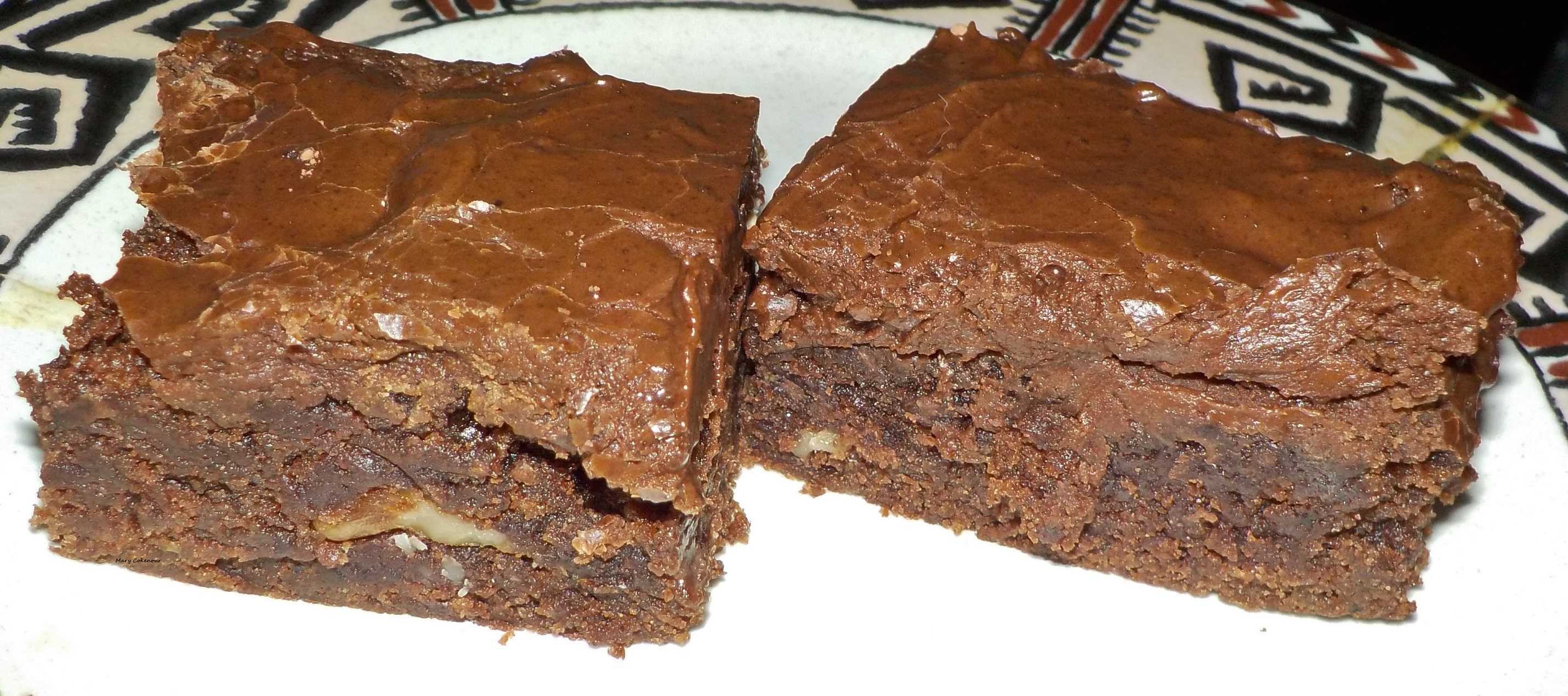
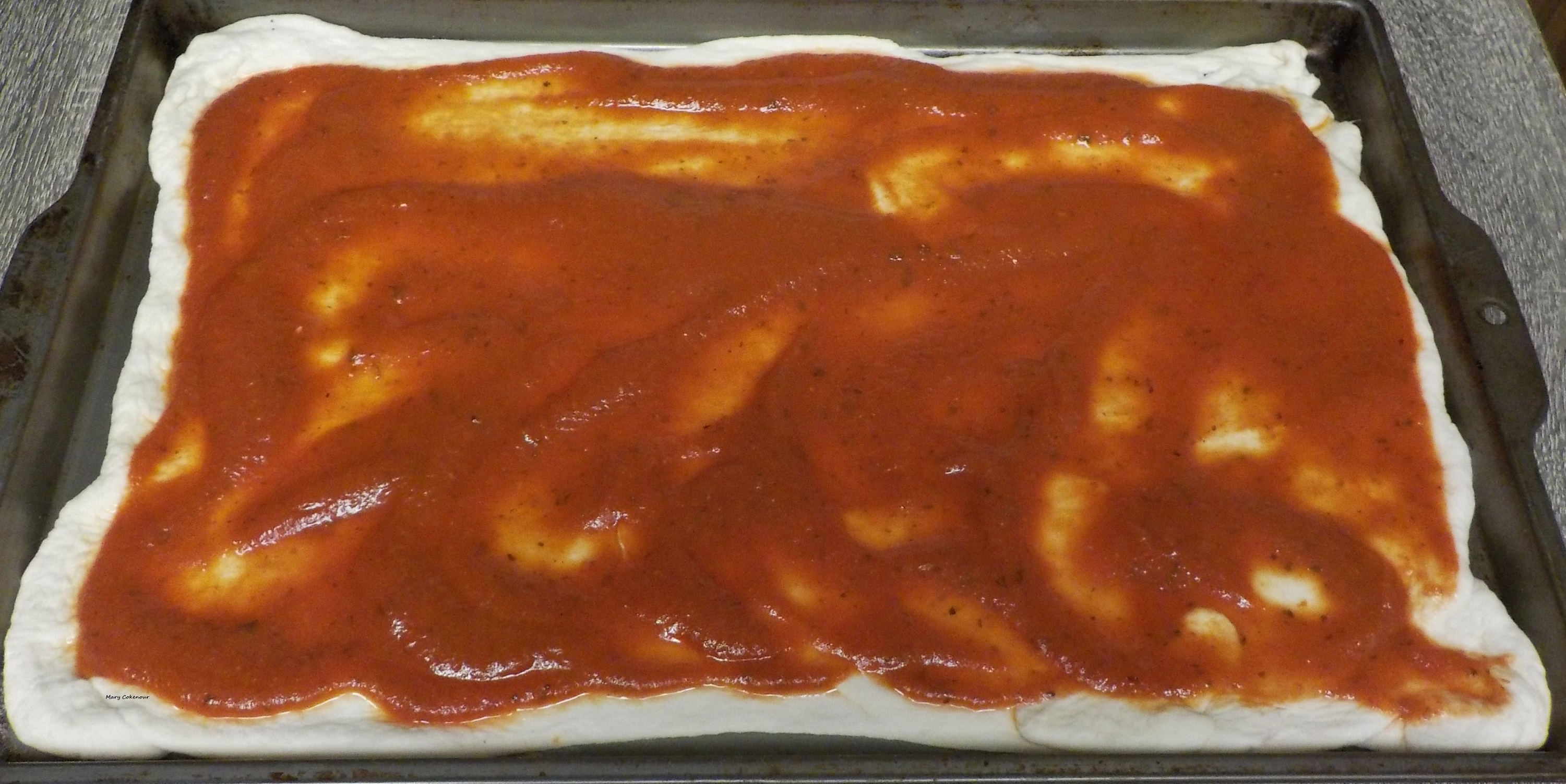
School Lunch Rectangle Pizza and Lunch Lady Brownie

 Lunchroom Lady Brownies is a 50-year-old recipe, supposedly created by a lunch lady in the 1970s, primarily claimed by the South, but other sites state it was Idaho.  After baking, it has a cake-like texture, but as it cools, shrinkage creates a chewier texture.  Whether frosted or not, the brownie itself is fudgy and tasty.


Lunchroom Lady Brownies

 Ingredients:

1 cup butter, softened

2 cups sugar

4 eggs

4 tsps. vanilla

1/2 cup unsweetened cocoa powder

2 cups all-purpose flour (add 2 Tbsp. for high altitude)

1 cup chopped walnuts or pecans (optional)

Preparation:

Preheat oven to 350F; spray 9 x 13 baking pan with baking spray, or line with parchment paper.


In a large bowl, cream together butter and sugar until fluffy; beat in eggs one at a time, beat in vanilla.  In a medium bowl, sift cocoa with flour; mix dry ingredients into wet until fully incorporated (will form a thick batter).  Mix in nuts if desired.

Before Baking

After Baking and Cooling


Smooth out batter into pan; bake 20-25 minutes, or until toothpick, inserted in center, comes out clean.

Icing (Optional)

1/4 cup softened butter

¼ cup evaporated milk, or 2% milk

1/4 cup unsweetened cocoa powder

3 cups powdered sugar

Dash of salt (optional)

Beat all together until smooth; frost brownies after completely cooled; cut into squares.


Makes 15-18 brownies, depending on size cut.


For the pizza, the recipe on the archive site is a bulk recipe, so I was able to find a modified version for a smaller version.  In the past, I have made a similar recipe using either store bought pizza dough, or, for a thicker pan-pizza crust, bread dough. 


School Lunch Rectangle Pizza

(Original from archive.org: https://archive.org/details/CAT92970475/page/n71/mode/2up which contains recipes used in public schools.  This recipe was modified by Oven & Apron Blog: https://ovenandapron.com/2014/09/28/old-school-rectangle-pizza/)

Ingredients:

scant 2 tsp (6 g) active dry yeast

2 2/3 c (317 g) all-purpose flour

3/4 c (52 g) nonfat dry milk powder

2 Tbs + 1 1/4 tsp (34 g) granulated sugar

1/4 tsp (3 g) salt [feel free to increase up to 1/2 tsp salt for more flavor!]

1 1/4 tsp (6 g) vegetable oil

scant 1 2/3 c (384 g) warm water

16 oz part skim mozzarella cheese, shredded

2 c prepared pizza sauce

22 slices (40 g / 1.4 oz) pepperoni, minced (optional)

Preparation:

Preheat your oven to 475 degrees. Spray a half-sized sheet pan (18″ x 13″) with cooking spray and set aside.

In a medium sized bowl, stir together the yeast, flour, milk powder, sugar, and salt. Add the oil and stir to combine.

Add the warm water and stir until a thick batter forms (there will still be lumps remaining, that’s okay!). Spread the batter into the greased sheet pan and let the pan sit for 20-30 minutes.

Bake the crust in the preheated oven for 12-15 minutes. The crust will probably pull away from the edges of the pan, and that’s fine too.

When the crust comes out of the oven, sprinkle on 4 ounces of the shredded cheese. Spread the pizza sauce over the cheese, leaving a bit of crust showing around the edges. Sprinkle with the remaining cheese and the minced pepperoni.

Bake the pizza for 12 minutes, until the cheese is melty and the edges are browned. Let the pizza sit 5-10 minutes before slicing into rectangles, two rows of 5 rectangles each. Serve hot!


To store any leftovers, layer pieces between parchment paper or foil and store in a zip top bag in the fridge for up to 3 days.

Makes 10 pieces.

Now, whether you want to have your own lunch room memories revived, or make these recipes for children, grand, even great-grand children; well, have at it!  School’s out for summer.

Mary Cokenour