Showing posts with label seafood. Show all posts

Wednesday, January 28, 2026

New Year Do Overs.

The end of January is almost here, and I bet you’re wondering where did the first month of the new year go.  Well, depending on what country you live in, you might just have the opportunity to do a “Happy New Year!” do over.  This is also your chance to become more open-minded, and learn about new year celebrations in other countries.  Remember, the true meaning of life is to learn something new every day.

Chinese New Year (Lunar New Year) is celebrated in China and East Asia (Vietnam, Korea) between late January and mid-February, based on the lunar calendar.  2026 is the Year of the Horse, or more specifically, the Fire Horse, and begins February 17, 2026 until February 5, 2027. The horse is the 7th animal in the 12-year cycle of the Chinese zodiac.  It represents energy, freedom, speed, action, a dynamic time for new ventures, bold moves, social connections, and traits of honesty and independence.  The fire horse adds passion, intensity, and transformation aka "purification by fire”, and “trials by fire”.

Thailand celebrates New Year twice, officially on January 1st (International New Year) with fireworks and parties, and traditionally for Songkran in mid-April (April 13-15), which is the culturally significant Thai New Year with water festivals and family rituals. While January 1st is a national public holiday for the global New Year, Songkran is the major traditional festival.

Hindu/Buddhist New Years: Various regional festivals (like Songkran in Thailand, Vaisakhi in India) occur around mid-April, often linked to spring equinoxes.

Islamic New Year (Hijri New Year): Marks the start of Muharram in the lunar Hijri calendar, so the Gregorian date shifts yearly, observed by Muslim populations globally.

Nowruz (Persian New Year): Celebrated in Iran and parts of Central Asia on the spring equinox (March 20 or 21).

Ethiopian New Year (Enkutatash): Falls on Meskerem 1 (around September 11) in the Ethiopian solar calendar.

From the many food articles I have written, it is well known that Roy and I simply love to indulge in Asian cuisines.  Recently we celebrated New Year’s Eve at Ja-Roen Thai & Sushi here in Monticello.  Not only did we have the best in food to dine on, but spent the last day of 2025 with some of our favorite people, the staff at Ja-Roen.  I did ask if, in April, the restaurant would do a Thailand New Year’s celebration menu, and the manager, Palm, liked the idea of that.  I hope owner Waen and Robert go for the idea too, as we’re looking forward to see what kind of dishes are served at that time.

For Chinese New Year, in the past, making a delicious concoction of seafoods and vegetables, in a savory broth, was our honor towards the culture.  Typically known as Asian Seafood Soup or Seafood Hot Pot, this versatile recipe allows you to use various combinations of seafood and vegetables to create different types of Asian soups, such as a spicy Korean Jjampong or a tangy Thai Tom Yum.  In other words, when the new year celebrations come around for those countries, you’ll have a recipe to do them honor as well.


Not everyone is lucky to live in an area where fresh seafood is available, so frozen needs to be used.  To tell if frozen seafood is good to buy, check the packaging for no tears or frost, ensure the fish is solidly frozen without ice crystals or liquid, and look for uniform color and no freezer burn (white/dry spots); this indicates proper freezing, minimal temperature fluctuations, and better quality, with Individually Quick Frozen (IQF) shrimp being a good choice.  Many frozen seafoods come from Asian countries, like China, and should be avoided due to use of chemicals and poor-quality control.  Look for country labels such as: United States, Canada, Iceland, Norway, New Zealand, Scotland, Indonesia, Argentina, Ecuador, Honduras.  Yes, they may be pricier, but safer to eat and better quality.

Don’t be discouraged if the local market does not have the vegetables or seasonings needed; larger supermarkets are more diverse, so will more than likely have what’s needed.  Then again, from what I have been seeing, local markets are bringing more versatile products in, to keep the customers satisfied with needs and wants.  If you cannot find a fish listed, yes, you can substitute, but make sure it’s a firm fish; delicate fish will simply fall apart when cooking in the broth.


Asian Seafood Soup


Ingredients:

4 quarts Asian fish broth

½ lb. pollack, cut into bite sized pieces

1 lb. cod, cut into bite sized pieces

1 lb. medium sized raw shrimp, peeled and deveined

1 lb. whole baby clams, previously removed from shells (canned is acceptable)

½ lb. each chopped boy choy and shredded Chinese (Napa) cabbage

¾ lb. snow pea pods, strings removed

2 cups straw mushrooms

2 Tbsp. minced garlic

2 tsp. minced ginger root

3 Tbsp. oyster sauce


Preparation:

In a 6-quart pot, on high heat, bring the fish broth to a boil.  Reduce to medium-high heat, add in pollack and cod; cook for 10 minutes.


Next, add in shrimp, clams, bok choy, cabbage, snow pea pods, straw mushrooms; cook for 10 minutes (shrimp will turn pink). 

Reduce heat to low, stir into pot the garlic, ginger root and oyster sauce; cook for 10 minutes.

Serve in bowls; if desired a sprinkle of chopped chives or green onions is a sense-sational garnish.

Makes 8-10 generous servings.

The key to making a simple Asian fish broth is to use the bones from non-oily fish like snapper, cod or bass. 


Ingredients:

 1 lb.  fish bones and head, gills removed (don’t worry over meat stuck to the bones, only adds to the flavor of the broth)

2 Tbsp. canola oil

1 Tbsp. minced ginger

¼ cup diced white onion

4 cups boiling hot water

1 Tbsp. Chinese Shaoxing wine  

 ¼ tsp. white pepper

Preparation:

Rinse the fish bones and head thoroughly under cold water, washing away any blood near the spine. Pat them dry with paper towels to prevent oil splattering during frying.

In a 3-quart pot, heat oil, medium-high heat; add ginger and white onion, sauté for 2 minutes. Add fish bones to the pot and pan-fry until they are lightly browned on all sides.  

Add boiling water and Shaoxing wine; bring mixture to a boil, and reduce heat to medium. Cover pot and cook for 10 to 15 minutes, or until the liquid turns a creamy white color; do not go over 30 minutes or broth could turn bitter.

Strain the broth through a fine-mesh strainer to remove all solid bits, including small bones. Discard the solids, leaving a clear, flavorful broth.  Broth can be frozen up to 6 months.

Makes one quart. 

Mary Cokenour 


Wednesday, December 24, 2025

Make Fish the New Holiday Tradition.

Merry Christmas, Happy Holidays, and right around the corner is Happy New Year.  After running yourselves ragged buying the most perfect gifts, decorating the home inside and out, and making sure that every card sent had a personal message written, bet you forgot something?  What?  Forgot what?  No, no, like Santa, the lists were checked twice, thrice, nothing forgotten!  Oh, so, what are you making for the holiday meals then?

That’s when it hits, the food!  Yes, baked goods were made, as they were included on the gift giving lists, but now what to serve when family and friends gather around the dining table?  Aren’t you happy that Miss Mary has some ideas that you might find quite tempting?  Now wait, you might not like (shocking, I know) what I am going to write about now, basically fish, but if you go through the archives of both newspaper and food blog, you will find other holiday related meals in the beef, pork and poultry genres.  Fish, of course, is an important feature in feasting, religiously, culturally, and for health reasons.

Religiously, Jesus Christ and fish are deeply connected through biblical miracles, such as the feeding of the masses (multiplying loaves and fishes) and the humongous catches that called disciples to be "fishers of men,".  The early Christian symbol, the Ichthys (fish), which spells out "Jesus Christ, Son of God, Savior" in Greek, served as a secret identifier during persecution. Fish symbolize divine provision, the call to ministry, and the identity of Christ, appearing in stories from his ministry, resurrection, and parables.

Culturally, eating fish in winter symbolizes prosperity, hope for the future, and continuity.   For the Chinese New Year coins symbolize the scales of a fish, and moving forward.   In Italian households, the Feast of the Seven Fishes is celebrated on Christmas Eve, and symbolizes abstinence from eating warm-blooded animals.   For many cultures located in colder climates, frozen water (ponds, lakes, creeks, rivers) make catching fish a symbol of devotion or resourcefulness, representing endurance and provision.

Healthwise:

Boosts Mood: Omega-3s in fatty fish (salmon, mackerel) help combat Seasonal Affective Disorder (SAD) and depression.

Strengthens Immunity: Fish provides Vitamin D (often lacking in winter due to lesser hours of sunlight), zinc, and selenium to fight off seasonal colds and flu.

Heart & Lung Health: Omega-3s support cardiovascular health and increase airflow to the lungs.

Lean Protein: A high-quality protein source, essential for winter nourishment.

Of course, how the fish is prepared makes a huge difference in the benefits towards health. Broiled, baked or fried, using a limited, or none, of a healthy oil is better than high in fat oils, such as butter.  Lemon, white wine, dill and ground black pepper add, but also bring out the natural flavor of the fish itself.

…and this is where I contradict myself, and give you recipes that are far from healthy, but will delight all those sitting at your holiday table.

First up is Crab Imperial which originated in late 19th-century Baltimore, Maryland, at Thompson's Sea Girt House.  It is a rich, baked crab dish featuring backfin crabmeat in a creamy sauce with mayonnaise, bell peppers, and spices.  It evolved from an older European crab cake recipe featured Old Bay seasoning and breadcrumbs. Crab Imperial is often referred to as an elegant cousin to the crab cake, highlighting the famous Chesapeake blue crab.


Crab Imperial


Ingredients:

1 lb. crab meat (claw and/or lump, picked clean), or imitation crab, flaked

½ cup mayonnaise

3 Tbsp. Worcestershire sauce

2 Tbsp. each roasted red bell peppers and green onion, minced

¼ tsp. each dry mustard and paprika

1/8 tsp. ground black pepper

½ cup heavy whipping cream

½ cup Italian flavored bread crumbs

Preparation:

Preheat oven to 400F.  Spray a one-quart baking dish with nonstick spray.

In a medium bowl, mix together thoroughly all ingredients, except bread crumbs.  Place mixture into baking dish; sprinkle bread crumbs evenly over top.

Bake 20-25 minutes; or until bubbly and topping is golden brown.

Makes 4 servings.

The second recipe is my take on Southern Fried Catfish; but any firm white fish (cod, sablefish, tilapia, flounder) will work with this recipe.

Instead of coating the fish in an egg wash, I used plain milk.  The use of crushed red pepper flakes, instead of ground cayenne and paprika, aren't as hot in spice temperature, due to the difference in bulk, and add a bit of "decor" to the dry mixture. Technically, serving hush puppies up would make this a more southern dish, but I made my grandmother’s potatoes to remember her at this season.  The potatoes are basically her version of what is typically called "German potato salad".  The recipe is simply boiled potatoes (red or golden are best) cut into chunks or slices (your choice - leave the skin on!), mix in a bowl with olive oil, red wine vinegar, ground black pepper and salt.  I'm not putting any measurements here because it is all according to taste.  I like the tang of the vinegar and snap of sea salt, so add more than someone else might.


Southern Fried Catfish


Ingredients:

4(8 oz.) catfish fillets

1 cup milk

2 cups cornmeal

¾ cup sifted flour

2 tsp. fine sea salt

2 tsp. crushed red pepper flakes

1 tsp. each ground black pepper, garlic powder and onion powder

2 cups canola oil

Preparation:


Place fillets in shallow container and pour milk over them; turn fillets over twice to fully coat with milk.


In a second shallow container, mix together the cornmeal, flour and seasonings.


One fillet at a time, remove from milk and coat both sides with the dry mix. Shake off excess and set on plate until all are done; lay side by side, do not overlap coated fillets.


In a deep skillet, heat oil on medium-high heat until temperature of 350F is reached. Place two fillets into oil; let them fry for 4-5 minutes before turning over; let fry for additional 4-5 minutes; until golden brown. Remove from oil and drain on paper towels.


Makes 4 servings.


Note: a sauce made of 1 cup ketchup, ½ cup mayonnaise, two tablespoons grated horseradish mixed together thoroughly can be served as a condiment for this dish.


Happy, Happy, Joy, Joy, and eat your fish!

Mary Cokenour

Wednesday, August 6, 2025

The Italian Link to Carbon(ara) County.

When making new adventure discoveries, whether in food, travel or both combined, I try to find a direct link to a name.  Take, for example, the April 25, 2018 article on “Spaghetti alla Puttanesca and Lone Rock in the Kane Creek Canyon Rim”; Lone Rock aka Prostitute Butte, and puttanesca loosely translates to prostitute, so…

In my curiosity, I wanted to know if the influx of Italian immigrants, into Utah (1850s to 1880s, the first wave), influenced the naming of any rock formations, arches, or other natural landscapes.  That is a “no” except for a mention of Termeno, a town in Italy's South Tyrol region, in the archives of the Utah Geological Survey (Geologic Hazards Information page).  It is included due to a massive rock landslide that occurred in the town, and the hazards page supplementing the dangers of rock landslides.

Now, why did so many immigrants come to Utah at that time? They consisted mainly of Mormon converts, with some families arriving from Turin in the 1850s. These early settlers were attracted to Utah by the promise of religious freedom and the opportunity to build a new life within the Mormon community.

Ah, now comes the second wave of immigrants, and they meant business; business employment and development that is.  Italian immigrants arrived in Utah between the 1890s to 1920s, drawn by the expanding mining and railroad industries. They mainly came from both northern and southern regions of Italy, including Piedmont, Veneto (Tyroleans), Abruzzi, Lazio (Romans), Calabria, and Sicilia. Primarily, the most settled areas were in Carbon, Salt Lake, Tooele, and Weber counties, working in mines and on railroads.

Carbon County was so named, in 1894, due to the rich deposits of carbon, and coal mining became a huge boon to the area.   …and now comes the link to an Italian recipe, Pasta Carbonara.  No, no, this dish was not created in Carbon County, but it certainly was introduced, along with Italian cuisine in general. 

Carbonara is associated with Rome and the Lazio region (immigrants to Utah came from here), but, as with so many Italian recipes, who did it first is debatable. It is more often connected to “pasta cacio e uova”, a Neapolitan dish of pasta tossed with melted lard, beaten raw eggs, and cheese, as written in Ippolito Cavalcanti's 1839 Neapolitan cookbook.  In Italian, "carbonara" has no direct literal translation, and only refers to the pasta dish, “Spaghetti alla Carbonara”.  Traditionally it is made with eggs, hard cheese (Pecorino Romano), cured pork (pancetta or guanciale), and ground black pepper. The name is linked to the Italian word "carbone" (coal) and refers to the coal miners who enjoyed the dish and/or the black pepper that resembles coal dust.  Pancetta is the preferred product to use; an Italian cured pork belly, similar to bacon, but not smoked. It's made by salting and seasoning the pork belly with spices like pepper, fennel, and nutmeg, then curing it for several weeks.

Pancetta - Slab, Round, Diced, Pan Fried
 

Around 1945, carbonara began getting noticed in the United States, as American soldiers returned from Italy, and were craving this dish.  Also, more Italian immigrants, many being ex-POWs, followed our boys home, hoping for a better life than what WW2 had inflicted on them.

Carbonara can be eaten as is, or another, lighter in taste, protein can be added. In our household, it is primarily seafood served as a “topping”, but chicken (seared or grilled) will work perfectly.  A red meat can be too overwhelming in taste, and the flavor of the pancetta will get lost.  With seafood and chicken, the pancetta enhances each other, so you can taste each working together, yet full flavor of each separately.


Pasta Carbonara with Shrimp  
Here is my recipe for carbonara, and for searing seafood to accompany it.  Yes, frozen seafood can be used, but make sure to thaw before using.  If you cannot find scallops, or do not like them, definitely substitute shrimp.  Don’t like seafood, then use chicken; whatever your desire, make it your own. Can you add vegetables?  Sure, but do not make it too complicated.  A one quarter cup of diced onions and bell peppers, mixed together, is a nice, mild touch; add them into the final 10 minutes of cooking.


Pasta Carbonara

 Ingredients:

 2 Tbsp. butter

½ lb. diced pancetta (prosciutto, or unsmoked, thick bacon can be substituted)  

1 lb. strand pasta (thin spaghetti or angel hair are the best to use)

3 large eggs

½ cup. grated Pecorino Romano (Parmesan cheese can be substituted)

½ tsp. ground nutmeg

¼. tsp each salt and ground black pepper

2 Tbsp. diced fresh parsley

Preparation:

In a large skillet, medium heat, melt butter; add in pancetta (bacon) and cook till crisp; do NOT drain the fat.  At the same time, cook pasta according to package direction, but until just under al dente (I call it the “gummy” stage).

In a small bowl, beat together the eggs, cheese, nutmeg, salt and pepper.  Drain pasta and add to skillet; reduce heat to low.  Add in mixture from small bowl and mix thoroughly with pasta and crispy pancetta; cover and let cook for 10 minutes to make sure all is heated thoroughly, and the pasta becomes perfect.

Serve with sprinkled parsley over top.

Makes 4 servings.


Pasta Carbonara with Seared Salmon and Scallops

Seared Salmon and Scallops

 Ingredients:

 4 – ¼ lb. salmon filets (skin and pin bones removed)

12 large scallops

1 Tbsp. each sea salt, ground black pepper and paprika mixed together

4 Tbsp. olive oil (Option – substitute bacon fat for olive oil)

3 Tbsp. lemon juice

Preparation:

Season the salmon and scallops with the seasoning mixture.

In a large skillet, heat the oil on medium-high heat; place in salmon and cook each side for 4 minutes.  Remove to plate.  Next, cook scallops in same skillet; 2 minutes per side; remove.

Add lemon juice to skillet, mix with oil and scrape up any bits stuck to pan.  Pour liquid over the salmon and scallops.

Makes 4 servings of each seafood.

Mary Cokenour 

Wednesday, June 26, 2024

Fish and Chips are Not as British as You Think.

July 4, 1776, Independence Day, when the colonists of the New World (America) declared all ties cut from their mother country, Britain.  While the residents of this newly established country might have thought, “Well that’s all done with, time for tea and biscuits”, King George had a whole other thought.  Time for an American history refresher.

Tensions between America and Britain began on March 22, 1765, when British Parliament   passed the Stamp Act or Duties in American Colonies Act.  Colonists had to pay taxes on every page of printed paper they used which also included fees on playing cards, dice, and newspapers.  Britain continued to come up with other types of taxation, but the tax that put the colonists’ knickers in a tight twist was the one on tea.  Tea?  The all-day, every day beverage of every British citizen, young and old!  This tax was just another way to “help” Britain get out of some type of debt, and the colonists were seen as having more money than they needed.  This time, the tea tax was meant to be a bailout policy to get the British East India Company out of debt.  In retaliation, December 16, 1773, Boston Tea Party where 340 chests, of British East India Company Tea, weighing over 92,000 pounds, was dumped into the harbor.

Then Parliament tells the colonists, “Remember the French and Indian War in 1763, and how we defended and saved all your ass-ets?”, now we are upping taxes, so you can pay that off as well.

Tensions grew sky high until, finally, on April 19, 1775, local militiamen fought with British soldiers in the Battles of Lexington and Concord, in Massachusetts.  That famous line, “The shot heard round the world.” signified this engagement as the start of the Revolutionary War.

Ah, so remember when I wrote about Baked Beans (May 7, 2024 issue of the San Juan Record), and that the recipe did not come from Britain?  I am about to blow another recipe bubble up, and this time about a well-known traditional meal, Fish and Chips.  Whether you have been to the UK, watched any number of British based movies or television series, even read any novels, fish and chips is a staple of the British diet.  Cod and haddock have always been the main two species of fish to be used for this dish, but nowadays any firm white fish (cod, pollock, haddock, catfish, perch, or mahi-mahi) is acceptable. Main condiment used is malt vinegar, and an ample seasoning with salt.  The “chips” are not the crispy type that come in a bag for snacking.  No, they are potatoes that are cut either into round or short rectangular shapes, then deep fried to a golden crispness on the outside, but fluffy on the inside.  Oh, what do they call the snack bag type of potatoes?  Crisps…for an obvious reason.


Fish Used: Catfish, and Great for Making Fish Tacos As Well.
 

So, the true origin of fish and chips goes back, well, for England about the 15th century, but for Portugal, between the 8th and 12th centuries.  Basically, 20 percent of the population of Portugal, known then as Al-Andalus, was Jewish.  Since the Sabbath was on Saturday, and they were not allowed to cook, food was prepared on Friday afternoon that needed to last the next 24 hours. One very popular recipe consisted of white fish (cod or haddock) fried in a thin coating of flour or matzo meal. The batter preserved the fish so it could be eaten cold and still be quite flavorful.  Side note, with the recipe I will be giving, yes, the fish can be eaten cold, the batter is still crispy, not greasy, and the flavor is just as delicious as when it was served hot.

Jump to the 15th century, the Jewish population was driven out by the Spanish Inquisition

("Nobody expects the Spanish Inquisition!" – Monty Python), driven into England and a cookbook from 1781 gives credit to “the Jews way of preserving and cooking fish”.  Fish and chips became such a popular dish in England, that it is even mentioned in Charles Dickens’ novel, Oliver Twist, as “fried fish warehouses”.  Traditionally, the “serving container” was grease proof wax paper, then wrapped in newspaper as insulation.  Nowadays, wax paper plus unprinted paper is still used, but so are the typical “take-out”, or as they are called there, “take-away”, disposable containers of thick paper or styrofoam.

When I make the batter for the fish, I prefer to use ale; pale ale has a fruity flavor, offsets the use of malt vinegar and salt nicely, and combines with the white wine well.  Do not flinch at the use of alcohol, as it burns off during the frying process.  The whole idea is to go for flavor, not make your fish so drunk it is singing a naughty British pub tune.  However, what you do in the privacy of your own home is no one else’s business (“Wink, wink, nudge, nudge, know what I mean, aye?” – Monty Python)


By the way, having left over batter, I cut up a couple of chicken breasts and did the same cooking process for them.  Oh my!  The most delicious fried chicken pieces we have ever had; going back to my old ways of doing it will be difficult indeed.  So, carry on, pip-pip and all that rot.


English Style Fish and Chips


Ingredients:

2 cups flour, divided in half (1 cup for batter, 1 cup for dredging)

2 eggs

¾ cup beer or ale

¾ cup milk

¾ cup white wine

½ tsp. cream of tartar

½ tsp. baking powder

¼ tsp. each salt and pepper

peanut oil

6 large potatoes (red skinned or golden yellow), cut roughly into 1” pieces

2 lbs. cod, or any other white meat fish (pollock, flounder), cut into 4” pieces

Preparation:

In a large bowl, combine 1 cup of flour, eggs, beer, milk, wine, cream of tartar, baking powder, salt and pepper. Mix well, cover and chill for 1 hour.


Fill deep fryer to maximum line, or large skillet ½ way up, with canola oil; heat to 375-400F. Cook potatoes until just lightly browned; drain on paper towels; season with salt; transfer to cookie sheet. When done frying, place potatoes in oven (set at 200F) to keep warm.


Remix batter; dredge fish pieces into remaining 1 cup of flour; dip into batter and place in hot oil (3-4 pieces at a time). When batter turns golden brown and begins to puff, drain on paper towels.

Cod Portions


Dredge in Flour


Dredged in Flour, Ready for Batter


Coat in Batter

Cod Coated in Batter


Sizzling in Oil
 
Flip Portions Over to Complete Frying


Serve fish and chips with tartar sauce, malt vinegar or any other desired condiment.

Makes 4 servings.

Mary Cokenour


Wednesday, January 31, 2024

A Home Chef Experiences Home Chef.

This is a review of Home Chef, a meal kit and food delivery company.

Several weeks ago, the Kroger company (we know them as City Market around here) offered an online deal for Home Chef.  For those not in the know, Home Chef is one of those companies that provides meal delivery services.  Meals can be premade to be microwaved or cooked in the oven, or come as kits where you do all the prep work and cooking.  Home Chef hit the market in 2013, and was purchased by Kroger in 2018.  Now we know why Kroger pushes the online site, and also offers meals, ready to cook, in their deli departments.

The offer I went for was $80 towards meal purchases plus free shipping on the first order.  To complete the offer, I was required to pick out three meals, with two servings in each. There are categories of: Meal Kits, Family Meals, Express, Oven Ready, Fresh & Fast plus extra categories of: Lunch, Bundle & Save, and Extras (breakfast, soups, snacks, beverages, drinks, pantry and protein).  


Alright, my purpose for trying this out was, well, I do not always want to cook, I want convenience.  Shocking, I know.  Looking at the oven ready selections was a bust as they were already recipes created by myself, such as parmesan chicken or lasagna.  Why in the world would I want to buy someone else’s version of it?  Looks like convenience was not on my to-do list, so ended up with three meal kits: Teriyaki Glazed Yellowtail, Bacon Crusted Trout and Creamy Pesto Chicken Flautas.   Roy and I truly enjoy eating seafood, so the first two were a given, and attempting another Mexican dish sounded like fun. 


Servings for each kit start around $7.99 and can get very, very pricey if you select anything from the “Culinary Collection”.  The size of each serving is basically what is recommended by dietary practitioners, and eating only that serving, plus exercise, you will be a runway model in no time.  In our household, my husband considered both portions as a single serving (I did get to taste a few forkfuls), and off to work he went.  I, on the other hand, dug through the refrigerator and found leftovers to have for my dinner.   That is our household, so do not judge by our way of eating which is not always in a healthy manner.

Honestly, this kind of meal service is perfect for, say, a single person who might like to cook, but not the time to shop; or is seeking convenience.  Might work for a couple too; definitely not us, as a couple, though.  Price?  First let me get back to the deal I went for.  The first order received $40 credit, out of the initial $80, but was charging for shipping.  I contacted customer service about why no free shipping on the first order.  A very nice gentleman explained it was an error, corrected my bill, so what would have costed me about $75, ended up costing only $30.  However, the $40 credit that should have still been available, well I got some cow patty excuse that the offer was a mistake.  Excuse me, but what? 

Secondly, on price, this is the kind of service that is for, again, convenience, so you are going to pay for that privilege.  Unless you do not mind spending way more for meal ingredients, than you would at your local market or supermarket, this might be a good deal.  For those who have to live within a budget, this type of service is a way to break your personal piggy bank to smithereens.

My Home Chef account is now on “pause”, you cannot cancel the account unless you call customer service and speak with a representative.  This will be an interesting conversation in the future, let me tell you! (Note: as of Feb 1, I was able to cancel the account via email)

Consider what I have just written as the pros and cons of dealing with a meal delivery service. 

Now, I bet you are wondering, after having to prep and cook the meals myself, how did they taste?  Did we just waste $30 on an experiment, or get three good meals for a bargain?

The measured portions for each meal come in a little baggy, the protein is in a separate baggy, and the directions on a laminated sheet, that can be inserted into a binder, Home Chef includes.  The ingredients are separated into packets or containers, with their name written, so you know what is what.  Following the easy directions (photos included), prep took little time, cooking time was accurate.  The recipe is also printed on the sheet, so if you collect the sheets, you can make the dish if you purchase ingredients from the market.  Each serving took up the space of a smaller, than standard, sized dinner plate.  However, if you place the serving on a dessert sized plate, well it looks like a king-sized meal to enjoy. 


Taste wise, the meals were delicious, the seasonings were spot on, and the sides are perfect accompaniments to the proteins.  With the teriyaki glazed yellowtail (aka snapper), there were four portions of rice to only two portions of fish.  Thankfully, some leftover chicken, from the fridge, helped to create two more meals.  In other words, the amount of rice/veggie mixture was, basically, filler.


Saute edamame and Portabello mushrooms.                      


Pan cook seasoned yellowtail.


Enough rice side leftover to make two more meals.

Single serving.

Two servings.

Live a little, learn a lot, and that is how I am grading our experience with Home Chef.

Mary Cokenour

Wednesday, December 20, 2023

Scampering Around with Shrimp.

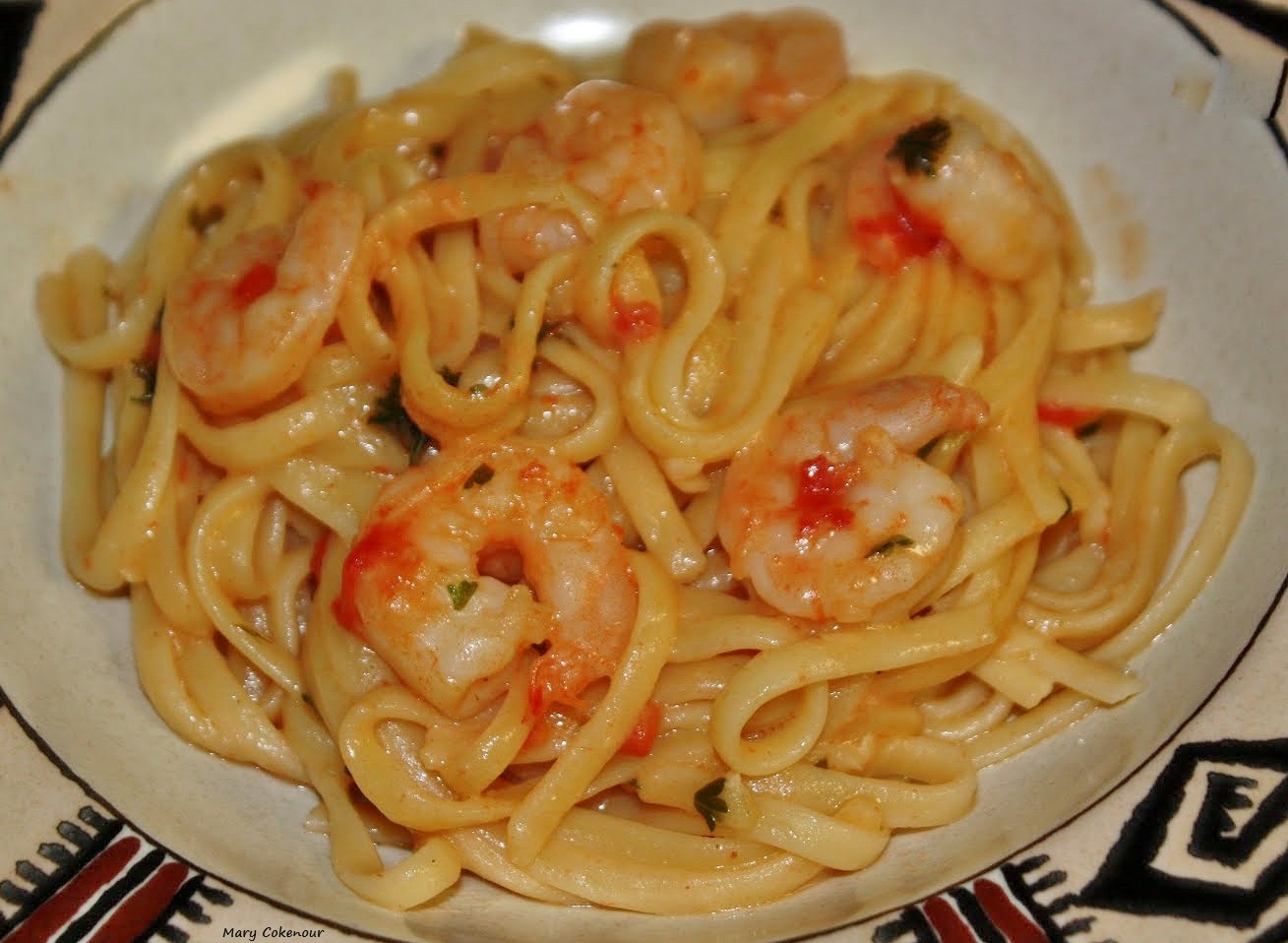
In many Italian homes and restaurants, Shrimp Scampi is often served as a main dish or an appetizer, dependent upon whether or not it is served with pasta.  Many think that the term "scampi" describes how the dish is prepared; the shrimp sauteed in a marriage of olive oil, butter, garlic, lemon juice and white wine.  However, this is not so; scampi actually refers to a type of small lobster known as the Norway Lobster, or the Dublin Prawn if in Ireland.  Langoustines also fall into this family of seafood, and in the many areas, crawfish serve as the main focus. Whether the seafood being used is a lobster, prawn, langoustine or the simple shrimp; the overall preparation gives you a dish both rich in scent and flavor.

The Italian city of Genoa boasts a claim to fame for the origin of the scampi recipe.  During the late 1800s to early 1900s, almost four million Italians, mainly from the southern end of the boot, and Sicily, immigrated to the United States.  Even though Genoa is located in the northwestern region, recipes migrated throughout the country, and across the Adriatic Sea to Croatia, so why not the USA as well?  While Italians suffered discrimination, as all immigrants eventually did, the cuisines of this European nation were embraced by American citizens.

Shrimp Scampi is an excellent dish to serve as a romantic dinner for two.  It cooks up quickly, leaving plenty of time for the couple to have "we" time with each other.  A perfect holiday for this meal, you would think, is Valentine's Day; but many couples are alone together for the winter holidays such as Yule, Christmas, Kwanzaa and New Year's Eve.  I did not mention Hanukkah as I believe that this recipe may not fall within the dietary rules of the Hebrew tradition.  Then there are the anniversaries or birthdays that need celebrating; with this recipe, any time can be a good excuse to serve it.

So let me introduce you to Shrimp Scampi; the recipe, not the sea creature.


Shrimp Scampi

Ingredients:

8 Tbsp. butter

2 Tbsp. olive oil

2 Tbsp. minced garlic

4 Tbsp. fresh, chopped parsley

1 Tbsp. grated red bell pepper

4 Tbsp. white wine

Pinch of salt and ground black pepper

2 lbs. medium to large shrimp; peeled and deveined

2 tsp. flour

1 tsp. lemon juice

1 lb. cooked linguine, keep warm

Preparation:

In a large skillet, medium-high heat, melt the butter with the oil; sauté garlic, parsley and bell pepper for 2 minutes; stirring constantly to keep garlic from browning. Add wine, salt, black pepper and shrimp; cook for 3-5 minutes or until shrimp turns pink. Stir in flour to thicken; add in lemon juice and linguine; toss to coat pasta and let cook 2 minutes.

Makes 4 servings.

With the winter holidays, many religions believe that only fish dishes should be served for Christmas Eve.  This is one recipe that should be added to the “Feast of the Seven Fishes”, and no one will complain.

Happy Holidays! from the Cokenour family.

Mary Cokenour


Wednesday, April 20, 2022

Eat Cod, Your Heart Will Thank You.

 Welcome to Utah, a landlocked state.  For folks who enjoy eating seafood, this fact can be quite frustrating.  Unless you are lucky to live in an area, with lakes, stocked with bass, trout, maybe even catfish, and happen to enjoy fishing; the supermarket is your only source.  Even then, much of the seafood available is frozen and shipped in from other countries, many with dubious quality control standards.
However, you just might be lucky enough to have a butcher at your local market; one that brings in fresh seafood, and when the prices are reasonable.  At Blue Mountain Foods, in Monticello, UT, Josh is the head butcher, and he is making the effort to introduce fish to the community.  Fish, depending on the species, happens to be packed in nutritional value, and good for overall health.

Sidetrack here, while chatting with Josh, I happened to see his second in command, John, grinding fresh beef.  The rich, red color of the meat, mixed with the whiteness of just the correct amount of fat, enticed me to stock up that day.  Oh, yes, you are so welcome for my last recipe on copycat White Castle burgers.

Alright, back to fish.  Josh’s suppliers are on the west coast, mainly California and Oregon.  The fish he purchases can either be wild caught, or farm raised; but they are brought in fresh.  The fish, which is iced, not frozen, could be flown to Salt Lake City and trucked down the same day.  Or, overnighted in even less time, insuring the fish arrives fresh, and is sold the same way…fresh!  Are we seeing the pattern here?

My latest purchase was a beautiful 1 and ¾ lbs. slab of cod; one inch at the thickest part, firm and fresh smelling.  That’s right, if fish has a really harsh fishy smell, chances are it is not in its best condition.  Also note, if fish has been frozen, thawed and refrozen, the texture will change from firm to rubbery.  Chances are, no matter how it is cooked, that rubbery texture will remain.

4 ounces (112 grams) of cod contains:

    Calories: 90

    Fat: 0.5g

    Sodium: 79.5mg

    Carbohydrates: 0g

    Fiber: 0g

    Sugar: 0g

    Protein: 20g

Half of the fat content is Omega-3 fatty acids and DHA.  Vitamins in cod are B12, C, D and Iron.  While all this is good for the heart, and the diet, it is also good to know that cod is low in mercury, as opposed to a more popular fish…tuna.

Of course depending on how you cook the fish, and what ingredients are added, the carb and fat contain might go up.  I baked the cod with a seasoned panko topping and olive oil, so, yes, the carb and fat count went up, but not too drastically.


Panko Baked Cod

Ingredients:

Olive oil

1 and ¾ lbs. cod (cut into 5 portions=3 and ½ oz./portion)

1 and ½ cups panko (Japanese bread crumbs)

½ tsp. fine sea salt

½ tsp. ground black pepper

½ tsp. dry dill

½ tsp. dried, crushed parsley

½ tsp. paprika

Preparation:

Preheat oven to 400F.

Drizzle olive oil into baking dish, or metal nonstick pan, and place fish, bottom side down, onto oil.  Drizzle oil, about teaspoon, over each portion of fish.

In a bowl, mix together panko, seasonings and herbs.  Press on top of, and along sides, each fish portion. 

Bake for 20 minutes.

Makes 5 servings.

As a side dish, I baked asparagus in foil, topped with butter and garlic, in the same oven. However, previous to placing the fish and asparagus into the oven, I had prepped some potatoes for roasting, and started those a half hour before.  So, all three items were ready to eat at the same time.  As to the overall carb and fat content, out the window those flew, but it sure did taste great!

Here are a few bonus recipes of mine, and, of course, no decent list of recipes would not include English Style Fish and Chips.  Eat your fish, not just for health reasons, but because it tastes so good!


Baked Cod and Squash

Ingredients:

1 small zucchini, cut into 1/4 inch slices

1 small yellow squash, cut into 1/4 inch slices

1/2 cup olive oil, divided in half

2 Tbsp. Italian herbal mix, divided in half

2 tsp coarse sea salt, divided in half

1 tsp garlic powder

2 (6 oz) cod fillets, one inch thick, bones and skin removed

1/4 cup fresh lemon juice

Preparation:

Preheat oven to 400F.  In a 1 and 1/2 quart glass baking dish, spread the squash slices over the bottom.  Drizzle 1/4 cup of olive oil over the slices; sprinkle one tablespoon of the herbal mix, one teaspoon of sea salt and the one teaspoon of garlic powder over them.

Lay the cod fillets (skin side up) on top of the squash; drizzle with remaining olive oil; sprinkle remaining herbal mix and sea salt; drizzle lemon juice over all.  Bake for 25 - 30 minutes; until cod is opaque and flakes easily.  Remove one fillet and portion of squash to plate; spoon liquid from baking dish over all.

Makes 2 servings.

~~~~~~~~~~~~~~~~~~~~


Baked Cod in Foil

Ingredients:

2 tsp lemon juice

1 Tbsp. olive oil

1/4 tsp minced garlic

1/4 tsp dried parsley

1/8 tsp salt

1/8 tsp ground black pepper

1/4 tsp paprika

1 (6 oz) cod fillet, 1 inch thick, skin removed

Preparation:

Preheat oven to 350F.

In a small bowl, mix together all ingredients except the fish.  Brush skin side of fish liberally with the mixture; place skin side down in center of large square of aluminum foil.  Pour remaining mixture over fish; fold long sides of foil together several times before folding up ends to make a packet.  Make sure foil is not folded too tightly around fish or steam from baking may cause it to burst open.

Place foil packet onto small aluminum baking tray; bake for 15 to 20 minutes; fish will be opaque.  Remove to plate; spoon liquid over fish and over a portion of steamed vegetables or small baked potato.

Serves one.

~~~~~~~~~~~~~~~~~~~~~~


English Style Fish and Chips

Ingredients:

2 cups flour, divided in half (1 cup for batter, 1 cup for dredging)

2 eggs

¾ cup beer or ale

¾ cup milk

¾ cup white wine

½ tsp. cream of tartar

½ tsp. baking powder

¼ tsp. each salt and pepper

Peanut oil

6 large potatoes (red skinned or golden yellow), cut roughly into 1” pieces

2 lbs. cod, or any other white meat fish (pollock, flounder), cut into 4” pieces

Preparation:

In a large bowl, combine 1 cup of flour, eggs, beer, milk, wine, cream of tartar, baking powder, salt and pepper. Mix well, cover and chill for 1 hour.

Fill deep fryer to maximum line, or large skillet ½ way up, with canola oil; heat to 375-400F. Cook potatoes until just lightly browned; drain on paper towels; season with salt; transfer to cookie sheet. When done frying, place potatoes in oven (set at 200F) to keep warm.

Remix batter; dredge fish pieces into remaining 1 cup of flour; dip into batter and place in hot oil (3-4 pieces at a time). When batter turns golden brown and begins to puff, drain on paper towels.

Serve fish and chips with tartar sauce, malt vinegar or any other desired condiment.

Makes 4 servings.

Mary Cokenour