Wednesday, February 23, 2022

Cookies Were a Sweet Mistake.

 The cookie, a word derived from the Dutch “koekje”, meaning “small or little cake”.  All over the world, cookies are created in all shapes, sizes, flavors and textures.  Guess what?  They were a mistake! 

Persia (modern day Iran) was one of the first countries to grow and harvest sugar cane.  As far back as the 7th century, Persian bakers were using it to make cakes, breads and even delicate candies.  Small discs of dough or batter were used to simply test the temperatures of the ovens; then discarded, or added to animal feed.  By the 14th century, sugar was making the rounds of European countries and the Mediterranean.  Instead of checking only the “doneness” of the discs, curiosity won out, they were tasted and were found to be quite good.  The Renaissance Era, being one of enlightenment and discovery, saw the writing of books intensify, and cookbooks were included.  The addition of eggs, spices and flavorings launched an explosion of new recipes, all dealing with the development of cookies.

However, it was the advancements of “kitchen technology”, during the Industrial Revolution that helped cookies find new textures and shapes.   A typical cookie press was made from craved wood; the more polished, the less likely to crack and splinter.  With the smelting and molding of metals, the cookie press became more durable, but expensive and heavy to yield and carry.  As pioneers moved across the American plains and mountains, bringing along cookie presses, in a covered wagon, became too burdensome.  Glancing through pioneer cookbooks, if there were any cookie recipes, they were simplistic and the shapes molded by hand.  Even going through my variety of “Indians of the Southwest” cookbooks, the recipes I kept finding were variations of the typical sugar cookie; all using whole wheat and/or white processed flour.

As with the Persians of the 7th century, cakes and breads were more common fare among the peoples of the Americans.  It was not till the “discovery” of the New World that more food variations were introduced by pioneers, traders and adventurers.

Three ingredients typically found in native baking are blue corn flour, juniper ash and pinon nuts.   While I did find recipes for breads and cakes, again, cookie recipes were a mystery.  It was on a food blog, “The Fancy Navajo” (https://thefancynavajo.com/), that I was able to find a perfect recipe to try out.  A Navajo lifestyle and food blogger, from Phoenix, AZ, Alana Yazzie is proud of her heritage and culture; and sees the importance of keeping it alive through sharing.   I am a member of the “Navajo, Pueblo, Apache and Hispanic Cooking” page, on Facebook, and her food blog and recipes are often recommended.

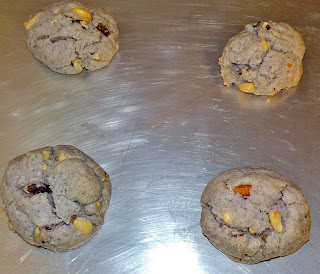
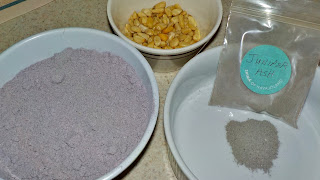
Since this was the first time trying her recipe, I kept it simple and neat by rolling out the dough into balls, and letting them do their own thing, in the oven, while baking.  The cookies have a lovely purple-blue coloring, crisp throughout, and tend to melt in the mouth as chewed.  I added raw pinon nuts into the dough, instead of just a topping.  They toasted as the cookies baked, adding a great nutty flavor.  If flattened, the cookies bake in about 8-9 minutes, but since I left them as balls, they took about 12 minutes in my oven.
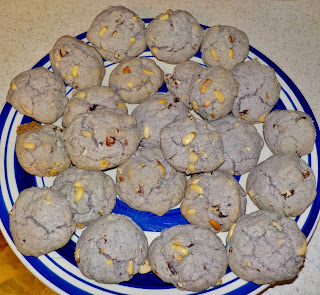


Fancy Navajo Blue Corn Cookies

(https://thefancynavajo.com/2020/02/12/fancy-navajo-blue-corn-cookies/)

Ingredients:

1/2 Cup Unsalted Cold Butter
1 Egg

3/4 Cup Sugar

1 Teaspoon Vanilla Extract

1/2 Teaspoon Baking Soda

1/2 Teaspoon Juniper Ash  

1/4 Teaspoon Salt

1/2 Cup Flour

1 ¼ Cup Blue Cornmeal


Instructions:

Preheat oven to 350 F. Line baking sheets with parchment paper or nonstick mat.

In a large mixing bowl cream butter and sugar together until pale and creamy.

Add in vanilla and egg until thoroughly combined.

Add in baking soda, juniper ash, and salt until thoroughly combined.

Add in Flour and Blue Corn Meal in ¼ cup increments until combined.
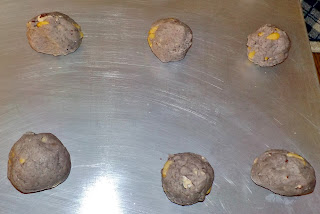
 

Prepare cookie dough for baking, they can be rolled out in ¼ inch thickness, or scooped and pressed down.  


Bake for 8-9 minutes or until the edges start to turn brown. Let cool for 2 minutes before removing from baking sheet. Cookies should mostly be blue and the edges slightly brown. If the cookies are mostly brown, then they are over baked and you may need to reduce time for baking.


Yields: 18 cookies.


While I know most folks have their “go-to” cookie, try something different next time.  You might just find yourself pleasantly surprised.

Mary Cokenour

Wednesday, February 9, 2022

Remembering Childhood Comforts.

Happy childhood memories are few for me and they almost all seem to revolve around food in some way. No wonder really, as food is comforting in itself. It fools you into believing that all is right with the world, well for that moment at least; and later on, if need be, the memory of it can soothe an unpleasant moment in time. 

Take, for example, a thunderstorm brewing and suddenly taken back to a childhood memory. During such storms, I would put four chairs in a square formation, throw a large blanket over them and pretend to be camping outdoors. Some of you probably did the same thing, but called it “playing fort”.  I would have my favorite stuffed animals as company, a flashlight to light the interior, books to read and a large bowl of one of my grandmother's home cooked meals. It could be spaghetti and meatballs, shrimps in sauce over spaghetti, or one of her many delicious soups. Whatever it was, it was wonderful and I would always sneak out of my tent (between thunderclaps) to get a second bowl.

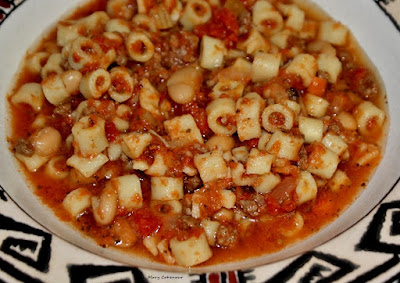
My grandmother's cooking was able to provide me with, not just comforting moments, but comforting memories to help me later on. One such dish was her Paste E Fagioli; a wonderful dish of beans, meat and pasta in a flavorful broth. The steam rising up from the bowl, so fantasy figures could be picked out, much like one would do when watching the clouds in the sky.  Problems are set aside momentarily while the senses take in the taste, texture, smell and overall good feel of the food being consumed.  Oh, the problems are still there, but now a calm has been reached.  The mind and body, instead of knee-jerk reacting, can deal in a more orderly manner; or that is what we hope for.

While Pasta e Fagioli (meaning pasta and beans) is a typically Italian soup, recipes can be found as far as the Alps, and stretching all through the Mediterranean.   Originally, the scarcity of meat made this a vegetarian meal with the starchiness of the beans, maybe potatoes too, giving a thicker consistency.  As cattle, pigs and sheep became more plentiful, additions of these meats elevated the quality of the soup.  Think of this recipe as an example of the story, “Stone Soup”; whatever is at hand can be placed in the pot, all combining for a delicious meal.  My grandmother made this soup in a large stock pot on the stovetop, but I have converted it for cooking in a crock pot.  The stovetop method took hours; stirring and checking to make sure nothing stuck to the bottom and burned.  The crock pot method still takes long hours of cooking, but “setting and forgetting” is less stressful.


 Pasta E Fagioli

 Ingredients:

2 lbs. lean ground beef

1 large onion, diced

3 medium carrots, peeled and diced

4 celery stalks, diced

1 (14 ½ oz.) can diced tomatoes

1 (15 oz.) can tomato puree

1 (28 oz.) can crushed tomatoes

2 (16 oz.) cans white kidney beans (Great Northern), drained and rinsed

1 qts beef stock

3 tsp oregano

2 tsp ground black pepper

4 Tbsp. dried parsley

¼ tsp cayenne pepper flakes

8 oz. ditilini pasta, cooked before adding to the crock pot

Preparation:

In large skillet, brown meat till no pink shows; drain grease.

Spray 6-quart crock pot with non-stick spray. Mix together meat and all ingredients, except the pasta. Set on low heat and cook for 7 hours; add in pasta and cook another 15 minutes before serving. If desired, grated Parmesan cheese can be sprinkled on top of each serving.

Makes 12 - 14 servings.

Mary Cokenour

Wednesday, February 2, 2022

Gustavo’s Fine Guadalajara Cuisine

Gustavo’s Mexican Restaurant

216 East Center Street

Monticello, UT, 84535

Phone: (435) 298-8270

Facebook Page: https://www.facebook.com/profile.php?id=100076579636108


Entering the fifth week of their opening in Monticello, Gustavo’s Mexican Restaurant is doing well, and keeping the staff busy.  An offshoot of the original Gustavo’s, located in Cortez, CO, this cuisine is completely unique from other Mexican based restaurants. The owner, Gustavo, and the majority of his staff are from Guadalajara, and the cuisine of that region can only be defined as “fancified”.

Upon entering, expect to be warmly greeted by Kelyn, a local resident, who is being trained for the wait staff.  Gustavo believes in giving back to, and sharing with, the community.  Training of the staff is of utmost importance, as everyone will benefit from learning and knowledge.  Our waiter though was Angel (also the manager), who hails from Guadalajara, and lives up to his name.  Very friendly, ready and willing to serve, and a wealth of knowledge about the menu selections, and the cuisine of the region.  A truly excellent bonus to the diners is the chef, Miguel.  He is a graduate of the University of Guadalajara, with a degree in culinary arts; and his assistant cooks are trained to do it up delicious!


The building is the old PJ’s, a rustic A-frame design with open floor plan and wood planking on the floor and walls.  Happy Mexican music plays in the background, and I swear one of the songs was from Ricky Martin…ai-ai-ai, caliente!  Speaking of caliente, salsa and chips are served up immediately; and made in house.  


The salsa has a kick, but then you crave more; in the words of John Cougar Mellencamp, “it hurts so good!”  In fact, even though all supplies are shipped in from Gustavo’s in Cortez, all main dishes, appetizers, salads, desserts, and condiments (except ketchup) are made freshly in house.


Bestselling main dishes are the vast selection of Street Tacos, Chile Rellanos Crispie and Gustavo’s Enchiladas.  My hubby, Roy, went for the Rellanos, while I looked forward to a diverse selection of enchilada and chimichanga. 

Both choices are served with rice and beans; the refried beans creamy with cheese, and rice lightly seasoned and fluffy.

Now be warned, the food you receive will not be what you are used to seeing.  In fact, it is so pretty, a wave of guilt occurs when cutting into the food, for who wants to destroy artwork!?!

The Chile Rellanos Crispie is topped with a Caesar salad that mixes with the chiles and cheese; a slight crunch comes from the tortilla wrapped around each rellano and deep fried.  This dish is packed with flavors, perfectly cooked; the Hatch chiles sweet and filled with a creamy cheese.


My chicken enchilada was stuffed with shredded chicken, a mild red sauce intermingled with piped over crème fraiche; the flavors are mild.  The chimichanga is filled with a mildly seasoned ground beef, surrounded with a crispy exterior, almost like a delicate puff pastry.  While I wanted to finish up every bite, room for dessert had to be left.  All the mild seasoning allows the palette to experience the various tastes, while spicy heat would only hide the flavors.


Angel recommended Gustavo’s Pie, and it was definitely a very good choice to end with.  This dessert can only be described as a square of lemony cheesecake flan; light, creamy and rich, but not overwhelming in sweetness.  While whipped cream and chocolate sauce are nice complements, this dessert is delicious just as is.


By the way, after ordering, the food does come out quickly, but do not expect to be rushed to eat and leave.  The atmosphere at Gustavo’s is casual, so just relax and enjoy.  Looking around at other diners, everyone was either eating heartedly, or laughing and talking between bites.  Recently, Gustavo’s was awarded a liquor license, so if you are looking for a more potent potion to have with your meal, they will have it.

Monticello locals, or their taste buds I should say, have gained plenty from the addition of Gustavo’s to its restaurant lineup.  Currently hours of operation are Monday thru Saturday, 11am – 9pm; closed on Sunday.  Located on Center Street, catty-corner to Maverik, it will not be a surprise to see tourists and truckers also flocking into Gustavo’s.

Keep an eye out for advertising on their Facebook page, and shared to locally based groups; a Valentine’s Day Special is in the works.

Mary Cokenour


Wednesday, January 26, 2022

The Delicatessen - Palaces of Eatery.

Beginning in the 1840’s, Germans began immigrating to the United States; they brought with them many of their preserved, pickled and canned foods, and their family recipes. Delicatessen (also known as “deli”) is a combination of words which roughly translates into “delicacies to eat” or “to eat delicious things”. Within these palaces of eatery, authentic German and/or Americanized versions of foods were offered.  Varieties of sausages (or “wieners”), beef frankfurters, sauerkraut, hamburgers, meat loaf, liverwurst, cold cuts, noodle dishes, dill pickles, herring in cream sauce, lager beer, seltzer water, pretzels (hard and crunchy or the big, doughy New York-style soft pretzels), potato salad, muenster cheese, rolls, pastries, rye and pumpernickel breads.

During the 1890’s to 1920’s, Eastern Europeans of Jewish descent started to flock to the United States, bringing not only their language (Yiddish) and religion, but their own foods and recipes. Kosher and kosher-style delicatessens were established and New Yorkers were introduced to bagels, bialys, smoked salmon and white fish, Matzo and Matzo ball soup, pastrami, corned beef, tongue, borscht, chopped liver, pickled herring and potato pancakes.

When it came to a smorgasbord, the delicatessen was the place to indulge. New York not only personified the concept of the “melting pot” with the variety of ethnic cultures and religions, but also with the food items available to the public. As the United States developed, these cultures moved across the states and introduced the concept of the deli to many an area. In the 1950’s, supermarkets were introduced around the country which offered many of the same items as found in the neighborhood deli. This caused many a deli to close its doors, since they could not compete with the lesser prices a supermarket could charge due to bulk purchasing; but not a complete death.

Growing up, and living in, New York for a good part of my life, I was fortunate enough to experience the neighborhood deli. I miss delis and their uniqueness; the familiarity of the workers behind the counter, the smells of meats and cheeses, the yeastiness of the breads and rolls; it was a complete feast for all the senses.  Now I have not even mentioned the Italian deli, and that would be an article unto itself, since it would be a lead into bakeries and pizzerias.

Big chain supermarkets have begun to understand this concept of food tastes and smells bringing communities together.  They are expanding their services to provide more ethnic based specialties; make-your-own-salad bars; hot soups to go; and the deli sections are, once again, making sandwiches to order.  Even the bakeries are offering more choices than bagged, sliced breads; artisan styles of sour dough, ciabatta, and French and Italian loaves, or more rustic styles with crusty outside, but chewy inside textures.  Basically, the more diverse the populace, the more choices there are for bringing back memories, trying for the first time, or mixing and matching for an adventurous dining experience.

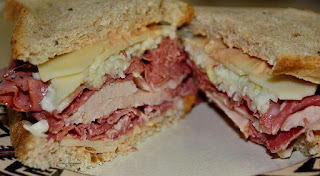
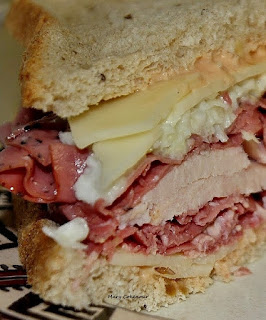
I make a mean deli sandwich of my own and here is one of my husband’s favorites.  Warning!  Like a boa constrictor, make sure you can unhinge your jaw, as you will need to, this sandwich is a mega-mouthful.


Roy’s Fave Deli Sandwich

 Ingredients:

2 slices rye bread

4 Tbsp Thousand Island salad dressing

2 slices Swiss cheese

¼ lb. each sliced turkey breast, corned beef and pastrami

1/3 cup cole slaw

Pickle spear

½ cup each potato and macaroni salads

Preparation:

Spread 2 Tbsp of salad dressing on one side of each slice of bread; place one slice of cheese on each slice. Layer on the cold cuts, top with cole slaw, close up sandwich, cut in half; serve with pickle spear and salads.

Serves one.

Mary Cokenour

Friday, December 31, 2021

Pioneer New Year Dessert - Shortbread

“Things falling apart is a kind of testing and also a kind of healing. We think that the point is to pass the test or to overcome the problem, but the truth is that things don’t really get solved. They come together and they fall apart. Then they come together again and fall apart again. It’s just like that. The healing comes from letting there be room for all of this to happen: room for grief, for relief, for misery, for joy.” ~Pema Chödrön


This quote describes life in general, does it not?  A day, in the life, of any individual has ups and downs; some expected, some a complete surprise.  Through most of 2021, the Cokenour household coasted through the year.  In October though, we lost our 11 year old Australian Shepherd dog, Tippy.  11 years of having our “big puppy”, and suddenly he was gone; a victim of cancer that had ravaged his body.  Where had 11 years gone?  How had we missed his getting older, when he constantly acted like a young puppy!?!   Then, in November, we lost our Maine Coon cat, Monkey; 15 years old and the last of our pets from our life in Pennsylvania.  To say the Yule and Christmas holidays were swallowed up in sadness would be an overwhelming truth. 

As good as 2021 had been for us, it had no intention of letting us get away with an almost completely happy year.  But that is life in reality, full of ups, downs and all-arounds that have your heart, mind and soul permanently strapped into a Tilt-a-World ride.

Now here it is, the New Year, 2022; and still no flying cars as depicted in the cartoon series, The Jetsons.  Hello 2022, what new adventures will you be flinging our way?  That is correct, we will be welcoming the New Year with open arms, eyes and mind.  Taking whatever lessons the past year has ingrained within us, taking this new bull by the horns, and riding till our butts are thrown upon the ground.  Give up?  You do not know us very well then.  Oh no, we dust ourselves off, look that bull in the eyes and say, “Bring it on!”  So, to all of you who have had it bad, and wonder if life is worth going on, we say, “Yes it is, so get on your own bulls and ride!”

When it comes to cooking, many households, throughout the world, welcome the New Year with a specialty menu.  It is geared towards filling the senses with happiness, and bestowing luck onto all who partake of the meal. Of course, while New Year’s Eve is geared more towards the consumption of alcohol (what better way to forget the old year?), the Day might be geared towards relieving a hangover.  You do you, right?

Back to food, and wondering how the pioneers, of Utah, celebrated the New Year.  Reading through The Mormon Pioneer Cookbook, I discovered there were two versions; one British and the other Swedish.  Since we enjoy British recipes, this is what I focused on more.  New Year was full of music, drama, dancing; celebrating the accomplishments of the past year such as building homes and good harvests.  In 1852, Social Hall was built in Salt Lake City, and was reputed to be the first theater built, west of the Missouri River.  It became the center for all social activities in the ever expanding Mormon community.  For New Year’s Eve, a late supper (British menu) was held, dancing till dawn, and then breakfast (Swedish menu) served.  The meals were buffet style, with households preparing and bringing all the dishes to share.  The late supper consisted of Irish Soda Bread, pork pies, Cornish pasties, Wassail (a hot cider drink full of citrus) and Scottish Shortbread; amongst other homemade and delicious foods of British Isle descent.

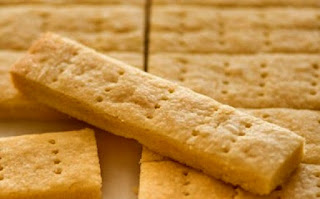
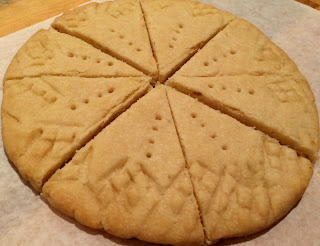
Scottish Shortbread is a simple recipe containing three ingredients: sugar, butter and flour.  Traditionally it is baked in a rectangle shape, and then cut into rectangular “fingers”.  It is considered to be a biscuit, but has been described as a cookie, due to its shape being changed by manufacturers.  Think of shortbread as Scotland’s version of Italian biscotti.  Sometimes a simple design would be pressed into the shortbread, before baking, with a cookie stamp; or holes indented with the tines of a fork.  Eaten by itself, or smeared with a fruit jelly or curd, and the New Year will start off being very happy indeed!


Scotch Shortbread

(The Mormon Pioneer Cookbook by Daughters of Utah Pioneers, page 62)

Ingredients:

½ cup unsalted butter

¼ cup confectioners’ sugar

1 and ¼ cups sifted all-purpose flour

Preparation:

Cream together butter and sugar until light and fluffy.  Gradually blend in flour, mix well.  Chill.

Divide dough in half.  Press into two 6-inch rounds on a lightly greased baking sheet.  Prick tops with tines of fork.  If desired, flute edges.

Bake in a 300F oven about 30 minutes or until delicately browned.

Cut each into 8 segments while hot.

Yield: 16 pieces

So, for 2022, I have been thinking to start the New Year with a bit o’ beef, Yorkshire pudding, gravy, new potatoes baked in butter, and, of course, Scottish shortbread for dessert.

From the Cokenour family to you and yours, Happy New Year!!!

Mary Cokenour

Wednesday, December 22, 2021

Candy to Cookie Conversion.

“Sometimes you feel like a nut.

Sometimes you don't.

Almond Joy's got nuts.

Mounds don't.”

(Written by Leo Corday and Leon Carr and sung by Joey Levine)


Whether you enjoy eating coconut, or not, when this commercial for Peter Paul’s Almond Joy and Mounds candies comes on, bet you find yourself singing along.
  While the Mounds bar was a huge hit, with the military, during WW2; Almond Joy has been around just as long.  Originally called the Dream Bar, the candy confection was a mixture of sweet coconut and diced almonds, encased in dark chocolate.  Once the Peter Paul Company purchased it though, the name was changed, along with the almonds.  Instead of diced almonds mixed in, two whole almonds were placed atop the coconut, making each whole piece a two-bite candy.  Now owned by Hershey, the current slogan for Almond Joy is “Unwrap Paradise”, and that would definitely make it a dream bar, once again, if it gave us paradise.

From the professional baker to the homemaker, it is not unusual to try and create a bake good, from the perspective of a candy.  Perusing the internet, many a recipe can be found where a cake or cookie has been created to resemble a brand name candy.  Snickers cheesecake anyone?  So, is it any wonder that Almond Joy is now an easy to bake, 4-ingredient cookie?  In fact, the recipe is so easy, that the almonds and semi-sweet chocolate chips can be swapped out for other types of nuts and chips.

Alright parents, the children are home from school for the winter holidays, and they will enjoy making these cookies with you.  With the main ingredient of coconut, think about making these for Easter as well, if you cannot find, or make, coconut crème eggs. 

Oh, and I took this recipe one step further than just swapping ingredients; dipping the bottoms in melted chocolate!  Want to go even further, drizzle that melted chocolate over the cookie.  With chocolate, more is always more!  I recently made two separate batches, and a half of each batch was dipped in either dark or white melted chocolate.  I have received requests to, “Please make more, and they were so good!”  If you needed independent endorsements of this recipe, now you have them.


Recipe for Almond Joy Cookies

(Note: I could not find the origin of this recipe.  Each food site/food blog I checked claimed to be the originator of this recipe.)

Ingredients:

1 (14 oz.) bag sweetened coconut flakes

2 cups semi-sweet chocolate chips

2/3 cup chopped almonds (lightly salted is preferred, but I used salted and still came out great)

1 (14 oz.) can sweetened condensed milk

Preparation:

Preheat oven to 325F.  Line aluminum/metal type baking sheet or pan with parchment paper (Note: this is a must if you want the cookies to cleanly come off the pan without crumbling.  Using silicone mats, or lining with wax paper, will cause the cookies to melt completely flat.)

In a large bowl, combine all ingredients; stir until well combined.  Using a 2-inch ice cream scoop, place a dozen mounds on the parchment paper.  Have a small bowl of water nearby to moisten tips of fingers to slightly flatten down the mounds, and firm up the round appearance.(Note: if using a 1 and ½ inch cookie scoop, 3 and ½ dozen cookies will be created)


Bake cookies for 12-15 minutes, or until cookies turn golden brown.  Let them completely cool on the parchment before removing; they will peel off easily.  Store in airtight containers.


Makes 3 dozen.


My first batch was using this original recipe.  The second batch, I swapped out the almonds for chopped walnuts, and used cinnamon chips instead of semi-sweet chocolate chips.  Again, 3 dozen cookies from the mixture.


Then I melted 2/3 cups of dark chocolate and white chocolate coating, in separate bowls (Ghirardelli brand, or almond bark works too).  I did intervals of 20 seconds, in the microwave, stirring after each interval, until completely smooth.  For the original recipe, I dipped half the batch in the dark chocolate.  For the walnut/cinnamon chip half batch, those were dipped in the white chocolate.  The cookies were placed, chocolate dip side down on wax paper and let cool until the chocolate hardened.


While the undipped cookies were definitely delicious, the dipped cookies went to a whole other level of awesome!  A simple 4-ingredient cookie which has so much potential to be more, depending on what ingredients are inside your baking pantry.  Bake ‘em up and have fun!

Mary Cokenour


Wednesday, December 15, 2021

Dear Santa, Please Fill My Stocking with Chocolate.

I like chocolate.  No, let me correct that. I LOVE CHOCOLATE!!!  Glancing at the typical food pyramid, one of the missing food groups is chocolate; the other is pizza. 

Cacao, by itself, is bitter, but the addition of fats, sweeteners and flavorings develop it into chocolate.  Eaten, in moderation of course, cacao is good for the heart. The beans are full of phytonutrients which act as antioxidants, and are rich sources of iron, copper, magnesium, zinc and phosphorus.

Chocolate as brain food?  In 2016, a study on Alzheimer’s patients was performed.  A group of 400 were given slight, moderate or large amounts of a chocolate snack, weekly.  Those of the moderate group saw a 40% decline in the illness, as opposed to the other groups.  (Journal of Alzheimer’s Disease: https://content.iospress.com/articles/journal-of-alzheimers-disease/jad160142)

Mood elevation?  Personally speaking, if I am feeling a bit blue, sad, angry, or frustrated; I reach for a mini, maybe even a fun size, bar of one of my favorites.  Opening the wrapper, letting the smooth chocolate melt on the tongue, and the sigh of contentment comes.  It is not just a feel good time in the mouth, but it is an overall feel good.  Now, can one get high eating chocolate?

Chocolate contains substances that stimulate a euphoric mood in the brain, just as cannabis does.  Anandamides, and substances that have similar effects as amphetamine, such as tyramine and phenylethylamine, lift up our mood, but calms it as well.  To get a high though would require consuming 20 pounds of dark chocolate!

If anyone is truly interested in chocolate’s history, types and production of popular brands, I recommend reading Chocolate Facts, Effects & History, by Jessie Szalay (Live Science, March 27, 2018: https://www.livescience.com/61754-chocolate-facts.html)

For occasions like holidays, birthdays, anniversaries, or any other special moment, boxes, or filled gift baskets, come with an assortment of fine chocolates.  The popular brands often advertised are Lindt, Ghirardelli, Godiva, and even Cadbury (some American candies are copies of these British confections).  Which got me to thinking about, “What does Utah have to offer in the chocolate department?”


Search, Purchase, Sample, Review.

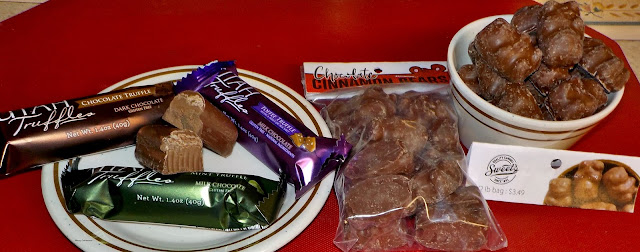
In Monticello, I was able to find, at Blue Mountain Foods, Utah Truffles (https://utahtruffles.com/), each bar costing a reasonable price of $1.29.  Flavors available are Chocolate, Mint and Toffee; ordering from the company itself though will offer more variety.  100% gluten free, using all natural ingredients, the truffles are covered in a smooth chocolate.

The center is creamy, with the flavor coming through, slight at first, and intensifying with every little bite.  This is a truffle bar that is not to be gobbled, but eaten nibble by nibble to have an ultimate chocolate experience.

Available at the San Juan Record are Sweet’s Chocolate Covered Cinnamon Bears (https://www.sweetcandy.com/), $3.49 for a ½ lb., $6.99 for a full pound.  Cinnamon Bears, in themselves, have a moderate bite to the tongue from the cinnamon spice.  Covering them in chocolate gives a whole new heightened experience; sweet with the heat!  These are not the typical tiny gummy bears, where you need a whole handful before feeling satisfied.  Oh no, Sweet’s bears are one inch in height.  Getting frustrated with the family, coworkers, even customers?  Take a moment, breathe, chew on one of these tasty bears; and you are now in your Zen zone.

Needing some ideas for stocking stuffers this year?  Consider trying Utah’s own chocolate confections. I do not believe you will be disappointed.

So, Dear Santa,

While I admit I could have been better this year…oh who are we kidding?  Santa, I want chocolate.  Thank you, and maybe next year I will do better.  *snicker* Yeah, like that will ever happen.

Mary Cokenour